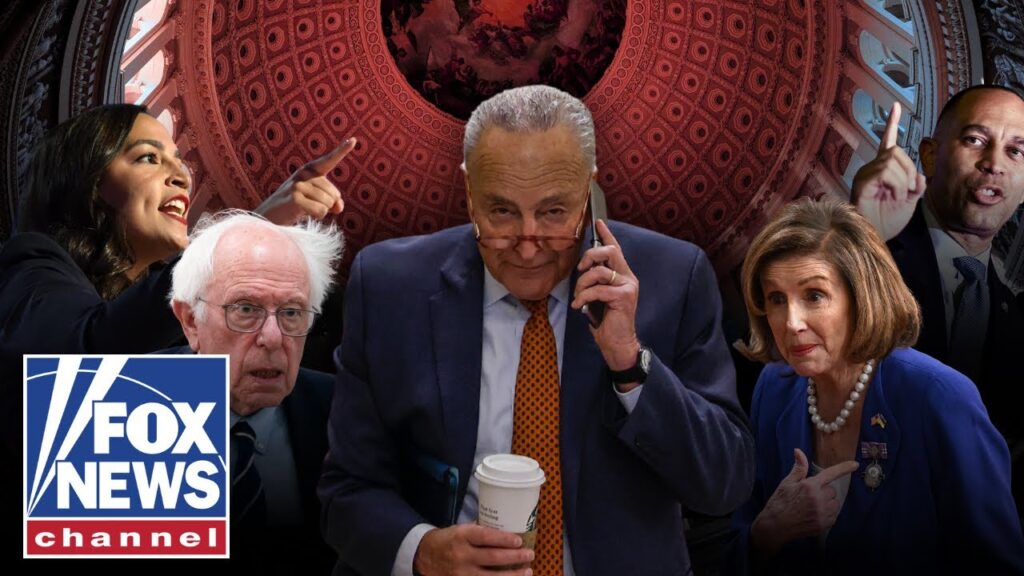
KNIVES OUT: Dems Reach ‘Point of No Return’ as Shutdown Comes to an End
The political drama in Washington reached a boiling point this week as the federal government shutdown—one of the most contentious in recent memory—finally came to a close. Yet, instead of relief and unity, the end of the standoff has exposed deep fractures within the Democratic Party and intensified criticism from both allies and opponents. Many analysts say the party has reached a “point of no return”, locked into internal battles and strategic missteps that could shape the future of national politics for years to come.
The shutdown itself, triggered by a stalemate over spending priorities and policy demands, lasted long enough to raise public frustration, disrupt federal services, and shake confidence in Washington’s ability to govern effectively. But while the reopening of government agencies brought a measure of immediate relief, it has also unleashed a wave of political consequences. Rather than emerging stronger, Democrats now find themselves navigating heightened scrutiny, questions about leadership, and widening divides over the decisions made behind closed doors.
The Final Hours of the Shutdown
As negotiations stretched late into the night, lawmakers scrambled to craft a temporary agreement that would fund government operations and avoid deeper economic repercussions. Federal employees faced uncertainty over paychecks, national parks and agencies closed to the public, and critical services were forced to delay operations. Pressure mounted from business groups, voter advocacy organizations, and state leaders demanding resolution before permanent damage was done.
The final agreement, described by insiders as a compromise built on urgency rather than optimism, allowed the government to reopen without resolving the core disputes that triggered the crisis. While both Democrats and Republicans claimed victory, the reality is far more complicated. The deal avoided immediate disaster, but it also intensified political tensions—particularly within the Democratic caucus, where the strategy used during the shutdown became a major point of contention.
Internal Party Turmoil
Some Democratic leaders argued publicly that the shutdown fight was necessary to defend critical policy issues and demonstrate strength against Republican pressure. However, others say the approach backfired, leaving the party appearing divided and reactive instead of unified and strategic.
Several prominent voices within the party questioned whether the shutdown was worth the political cost. As public opinion polls began to shift and frustrations grew among voters, internal arguments erupted over whether the leadership had miscalculated the leverage they believed they held.
Political analysts observed that the visible fractures—between moderates and progressives, between veteran legislators and rising newcomers, and between regional factions—appear more intense now than when the shutdown began. With upcoming elections on the horizon and legislative priorities stacked ahead, these divides could shape decisions on spending, foreign policy, and future negotiations.
The Public Response
Reaction from the American public has been mixed. Many citizens expressed relief that government operations have finally resumed, but polls show a growing sense of exhaustion with political brinkmanship. Among voters across the political spectrum, there is increasing dissatisfaction with elected officials who appear more focused on partisan tactics than on solving practical problems.
In interviews and community gatherings, federal workers shared stories of financial strain caused by missed paychecks, while small business owners described economic uncertainty trickling down to local communities. Families dependent on government services expressed frustration that they were caught in the crossfire of a battle they felt was avoidable.
For many, the shutdown highlighted the dysfunction of modern politics and deepened distrust in both parties.
Republican Response and Political Positioning
While Democrats face internal conflict, Republican lawmakers are using the moment to amplify critiques of their counterparts. GOP members argue that Democrats unnecessarily prolonged negotiations for political theater and now must answer to voters for the consequences.
At the same time, Republicans are preparing legislative strategies of their own, aware that the temporary funding measure only postpones another confrontation. Both parties are already gearing up for the next battle over long-term spending and broader policy issues that remain unresolved.
Yet, despite their criticisms of Democrats, Republicans also face pressure to demonstrate stable leadership and avoid another shutdown crisis. With national and global challenges demanding attention, neither side can afford a repeat of the chaos that unfolded in recent weeks.
A Turning Point for Democratic Leadership
The phrase “point of no return” has been repeated among commentators not because the shutdown itself is unprecedented, but because the political impact has revealed a crossroads moment for the Democratic Party. The path forward will require reassessment of strategy, communication, and unity—without which the party risks weakening its negotiating power and public credibility.
Many political observers say internal disagreements must be addressed quickly. If leaders cannot align behind consistent messaging and purpose, internal conflicts may overshadow legislative achievements and complicate election campaigns already underway. For Democrats, the pressure is now not only to govern effectively, but to rebuild trust within their own ranks.
The Road Ahead
With the shutdown officially over, Congress faces a long list of unresolved issues requiring immediate attention, from budget reforms and economic planning to national security concerns and public welfare programs. The temporary funding measure simply delays these debates, setting another deadline that could trigger similar tensions if leaders fail to find sustainable solutions.
As the dust settles, one lesson has become clear: political brinkmanship carries real consequences—not only for elected officials but for millions of Americans who depend on functional government. The coming weeks will determine whether leaders can learn from the experience or whether the divisions exposed by the shutdown will deepen further.
For now, Washington returns to business, but the scars of the shutdown remain visible. The pressure is mounting, the stakes are rising, and the next chapter in the struggle for political power is already unfolding. Both parties know that public patience is wearing thin. Whether this moment becomes a reset or a breaking point will depend on what happens next.
One thing is certain: the knives are out, and the battle over direction and leadership within the Democratic Party has only just begun.
If you want, I can:
- Add quotes or fictionalized interview excerpts to make the article more dramatic
- Expand on historical shutdown comparisons
- Rewrite it in a more aggressive, news-style tone or more conversational tone
Would you like a version with more emotional intensity or more factual analysis?