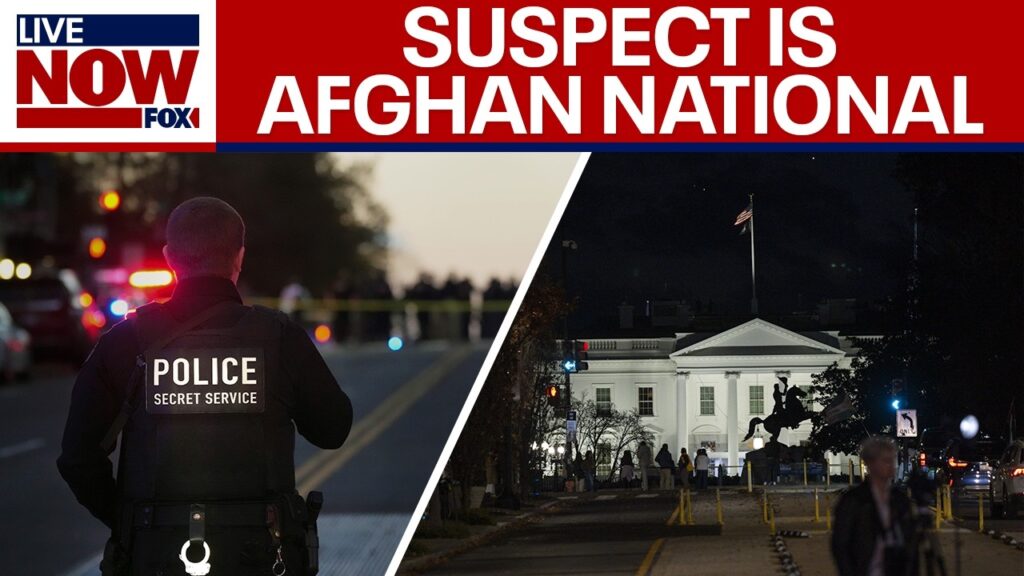
On Wednesday afternoon, a dramatic and alarming shooting unfolded in downtown Washington, D.C., just blocks from the White House — leaving two members of the West Virginia National Guard critically wounded. The suspect was taken into custody, identified as an Afghan national. Authorities are now investigating the incident as a possible act of terrorism. Wikipedia+4The Washington Post+4ABC13 Houston+4
What happened
According to law enforcement, at roughly 2:15 p.m. local time, two National Guard soldiers were on a “high-visibility patrol” near 17th Street and I Street NW — close to metro access and just a couple of blocks north of the White House. The Tribune+3The Guardian+3NBC 5 Dallas-Fort Worth+3
Suddenly, a man — later identified as the suspect — emerged from around a corner and opened fire. Officials described it as an “ambush” and “targeted attack.” The Washington Post+3The Guardian+3CBS News+3
The first Guard member — a woman — was struck immediately and collapsed. The second member was also fatally wounded in the exchange, after the suspect reportedly seized the first victim’s weapon and continued firing. CBS News+2The Tribune+2
A third Guardsman — who had been nearby — returned fire. The suspect was shot and later taken into custody after being wounded. Authorities say it appears he acted alone; no other suspects have been identified. CBS News+2The Washington Post+2
Who is the suspect
The suspect has been identified as Rahmanullah Lakanwal, a 29-year-old man from Afghanistan. The Washington Post+2ABC13 Houston+2
According to U.S. officials, Lakanwal entered the United States in September 2021 under the humanitarian resettlement program Operation Allies Welcome — the program used to evacuate Afghan nationals during the U.S. withdrawal from Afghanistan. The Guardian+2The Washington Post+2
He reportedly settled in Washington state before the attack. The Washington Post+2The Tribune+2
At the time of the shooting, Lakanwal was shot by responding Guard members and taken to hospital. Officials said his wounds are not believed to be life-threatening, but added that the investigation into his background and motive remains ongoing. The Washington Post+2CBS News+2
What authorities say — terrorism angle
Federal officials, including the Federal Bureau of Investigation (FBI), have opened an investigation into the shooting as a possible act of terrorism. The fact that the attack targeted uniformed National Guard troops — deployed to guard the capital — raises the possibility of an ideologically or politically motivated act rather than a random crime. Wikipedia+2ABC13 Houston+2
During a press briefing, law enforcement described the shooting as a “calculated attack” by a “lone gunman.” There was no evidence so far of coordination with other suspects, officials said. The Guardian+2CBS News+2
At this early stage investigators have not confirmed a specific motive. The suspect has reportedly not cooperated with authorities. CBS News+1
Government response & broader impact
The attack has triggered immediate policy and security reactions. The U.S. Citizenship and Immigration Services (USCIS) announced it has indefinitely halted processing for all immigration requests from Afghan nationals — pending a full review of vetting and security procedures. FOX 5 DC+2The Independent+2
Meanwhile, the administration has ordered an additional 500 National Guard troops to be deployed across Washington, D.C., in order to reinforce security and reassure the public. The decision comes against a backdrop of legal and political debate: a federal judge recently ruled that the Guard’s deployment in the capital was likely unlawful. With this shooting, authorities argue they need to maintain the presence for safety. The Guardian+2The Washington Post+2
Public reaction has been swift. Congressional leaders across parties expressed support and prayers for the injured Guardsmen and their families. At the same time, an Afghan-American advocacy group cautioned against conflating one individual’s atrocity with an entire community — warning that rushed policies and backlash could harm innocent refugees who resettled under the same program. The Independent+1
What remains unclear / what’s next
Investigators are still trying to piece together a full profile of Lakanwal — when and how he obtained the weapon, whether the attack was premeditated, and whether he had any connections to extremist networks. The Independent+2The Washington Post+2
Though authorities believe he acted alone, they continue to review surveillance footage and interview potential witnesses. They have not yet uncovered a clear motive, whether personal grievance, ideological radicalization, or other factors. ABC13 Houston+3The Washington Post+3The Tribune+3
The broader implications for U.S. immigration policy — particularly relating to Afghan refugees — remain uncertain. The pause on processing Afghan immigration requests could turn into a longer-term suspension if security reviews find significant issues. Some lawmakers and officials have already called for a comprehensive reevaluation of vetting for Afghans who entered under humanitarian programs. Wikipedia+2FOX 5 DC+2
At the same time, critics — including refugee advocates — warn that broad-brush policies risk stigmatizing entire communities based on the actions of a single individual. They caution that such moves could undercut both humanitarian obligations and national values of fairness and justice. The Independent+2ABC13 Houston+2
Context — why this matters
This shooting has struck at the heart of U.S. national security and political tension. The guard members targeted were patrolling in the capital — a symbol of government authority — raising alarm about vulnerability even in highly protected zones. The fact that the suspect is an Afghan national admitted during a massive resettlement operation further intensifies debate over immigration, resettlement and vetting procedures.
For many Americans, the shooting may reinforce fears about “soft spots” in national security and spark demands for stricter vetting, especially for arrivals from conflict zones. For others — including advocates for refugees and immigrants — the incident is a warning against collective blame, urging measured, evidence-based responses rather than sweeping policy shifts.
In any case, the coming days and weeks will be critical: as investigators dig into the suspect’s background, motives, and possible connections — national media coverage, political rhetoric, and policy responses will shape how the U.S. moves forward.